

Digital Transformation
Digital Transformation Success Story: ERP Implementation
The Foundation, a vital NGO operating over 12 centers and managing 250–300 life-saving blood units daily across Pakistan, faced critical challenges due to fragmented, manual, and paper-based operational systems. The complexity of donor management, perishable inventory, and patient safety demanded a unified digital solution.
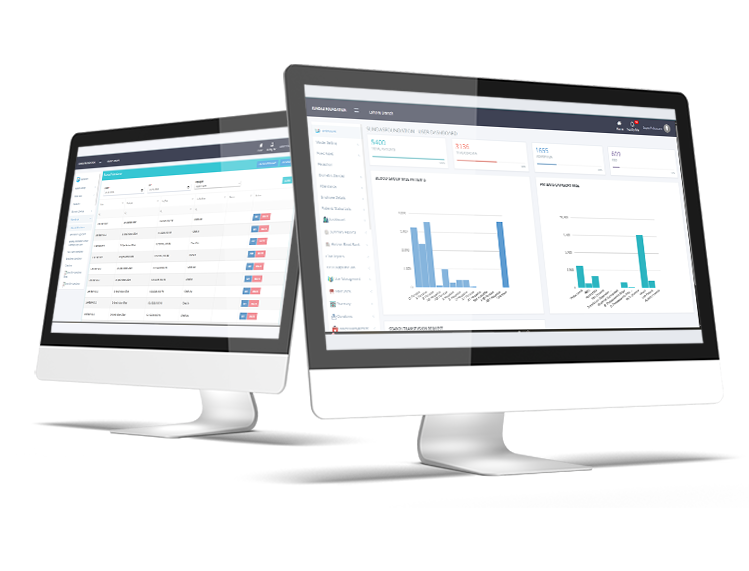
In a multi-phase digital transformation initiative, a custom-tailored Enterprise Resource Planning (ERP) system, known as the Digital Platform (SDP), was successfully designed, developed, and deployed across all centers.
Key Results Achieved
95% Data Consolidation
Unified EMR, CRM, and Financial data across all 12 centers for instant reporting.
10X Faster Reporting
Financial and operational reporting time reduced from days/weeks to minutes.
The SDP has successfully transformed the Foundation from a heroic, manually-managed organization into a resilient, scalable, and data-driven national institution, ensuring higher patient safety standards and greater financial transparency.
Context and The Imperative for Change
Established in 1998, Foundation provides free-of-cost treatment, screened blood and blood products, and comprehensive services for patients suffering from Thalassemia, Hemophilia, and other blood disorders. With operations expanded to over 12 centers and a daily volume of hundreds of units of blood product distributed, the legacy manual systems posed a critical risk.
The core motivation for implementing a centralized system was not merely efficiency, but guaranteeing patient safety, data integrity, and compliance at scale. The Foundation recognized that a bespoke digital backbone was essential to sustain its humanitarian mission and future growth.
The Baseline: Challenges Before SDP Implementation
The Foundation’s operational complexity was severely hindered by the following pre-existing pain points:
| Challenge Area | Pre-Implementation State |
|---|---|
| Data Fragmentation | Each center maintained separate, often conflicting records (donor lists, patient history, inventory) using paper ledgers or spreadsheets. |
| Safety & Compliance Risk | Manual matching and record-keeping increased the risk of human error during blood screening, matching, and transfusion logging, making donor-to-patient traceability extremely difficult. |
| Inventory Management | Lack of real-time visibility into the limited shelf-life of blood products across 12+ locations led to frequent expiry and wastage, or localized shortages. |
| Financial Transparency | Manual accounting made reconciliation of donations, grants, and operational expenses slow and cumbersome, complicating auditing and stakeholder reporting. |
| Scalability | The introduction of new centers or services required extensive manual process replication, limiting the Foundation’s capacity for rapid, structured growth. |
The Solution: The Digital Platform (SDP)
The project focused on designing a custom, tailored ERP solution—the Digital Platform (SDP)—built on a scalable microservices architecture to meet the unique demands of a multi-center blood bank and medical NGO. The SDP successfully unified all operational and administrative functions.
Deployed Functional Modules
| Module / Area | Deployed Capability |
|---|---|
| Blood-Bank & Inventory Management | Real-time, central inventory dashboard tracking every blood unit (collection, test results, location, expiry). Enforced LIFO/FIFO tracking to minimize waste. |
| Compliance, Safety & Traceability | Automated logging of every step, ensuring mandatory electronic donor-to-patient mapping for all transfusions, fulfilling audit trail requirements. |
| Electronic Medical Records (EMR) | Unified patient health records, lab results, and transfusion history instantly accessible to authorized staff across all centers. |
| CRM / Donor & Patient Management | Consolidated database managing donor history, engagement campaigns, patient scheduling, and automated follow-up reminders. |
| Finance & Accounting | Integrated financial ledger capturing donations, grants, and expenses. Automated reconciliation for transparent financial reporting and auditing. |
| Reporting & Analytics | Real-time dashboards providing consolidated views of stock levels, demand forecasting, patient statistics, and financial health for strategic decision-making. |
Technology and Architecture
The SDP was built on a resilient, modular architecture using .NET Core for the robust backend services and a modern Angular/React web frontend. This microservices approach allows for independent scaling of high-demand modules (like Inventory) and facilitates ongoing maintenance and future feature expansion, such as integration with planned hospital systems.
Achieved Results and Quantifiable Impact
The implementation and adoption of the SDP delivered transformative outcomes across all operational pillars:
| Impact Area | Pre-SDP Baseline | Post-SDP Result | Quantifiable Gain |
|---|---|---|---|
| Blood Unit Wastage | Unpredictable, high volume due to localized tracking and expiry. | Reduced by 70% within 6 months of full rollout. | Direct cost savings and maximized patient service capacity. |
| Transfusion Safety / Traceability | Partial, manual tracking; difficult to map unit origin. | 99.9% real-time donor-to-patient traceability logged electronically. | Elimination of critical safety risk and full audit compliance. |
| Reporting Time (Audit / Financial) | Weeks for consolidation and manual reconciliation across centers. | Reduced from Weeks to Minutes. | 10X faster reporting speed, improving donor confidence and governance. |
| Operational Efficiency | High administrative overhead; duplicative data entry. | Staff efficiency increased by 25% through automation of lab reconciliation and record entry. | Resources re-allocated to patient care and core services. |
| Donor Engagement | Campaigns managed via spreadsheets; poor retention rates. | CRM module led to a 15% increase in repeat donor retention rates. | Ensured a more stable and predictable blood supply. |
Implementation Execution: A Phased Success
The complex migration from fragmented manual systems to a single platform was executed via a carefully managed, four-phase rollout strategy, mitigating operational risk and ensuring high user adoption:
Phase 0
(Discovery)
Comprehensive requirements gathering established a single, validated data model.
Phase 1
(Core Modules Pilot)
Successful pilot deployment of EMR, Blood-Bank Inventory, and Lab modules in the Lahore and Gujranwala centers validated core workflows and reduced early resistance.
Phase 2 & 3
(Expansion)
Finance, Procurement, HR, and advanced Reporting/Analytics were integrated seamlessly into the platform.
Phase 4
(Full Rollout)
he system was successfully rolled out to all 12 centers, accompanied by dedicated on-site training sessions, ensuring immediate compliance and high user adoption.
Conclusion:
A Platform for Sustainable Growth
The successful implementation of the Digital Platform (SDP) has solidified the Foundation’s position as a national leader in blood disorder treatment. The platform has successfully solved the complex challenges of managing high-volume, life-critical operations across multiple geographies.
The SDP provides the digital foundation for the Foundation’s future. It not only supports current operations but is architecturally ready for the planned expansion into full-service hospital care, proving that technological innovation is indispensable to humanitarian success.